Show Me the Farm: The Push for Radical Transparency in the Food You Buy
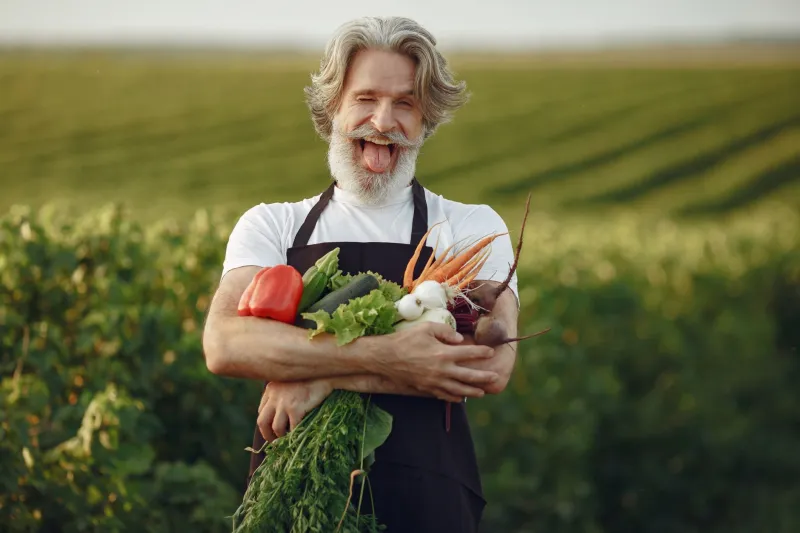
Here's a question worth sitting with the next time you're standing in the grocery store aisle: Do you actually know where that came from?
Not the country of origin listed in tiny print on the back of the package. Not the pastoral illustration of a red barn on the front. Not the vague claim that it was "responsibly sourced" or "sustainably raised." Where, specifically, did it come from? Who grew it, caught it, or raised it? Under what conditions? With what inputs? And how many hands did it pass through before it landed in your cart?
For most of us, most of the time, the honest answer is: we have no idea. And a growing contingent of American eaters has decided that's not good enough anymore.
The Traceability Gap
Food traceability — the ability to track a product through every step of the supply chain, from origin to table — has been a food safety concern for decades. When an E. coli outbreak hits romaine lettuce or a salmonella scare runs through bagged spinach, federal agencies need to trace the contamination back to its source fast. The systems for doing that, built largely around lot codes and paper trails, have improved significantly since the 2011 Food Safety Modernization Act. But food safety traceability and consumer traceability are two very different things, and the gap between them is wide.
"The system is designed to answer the question 'where did the problem come from?' not 'where did my food come from,'" says Claire Hutchins, a food systems researcher at Oregon State University. "Those require completely different infrastructure, and right now we've invested heavily in the first one and almost nothing in the second."
That's beginning to change, driven partly by technology and partly by consumer demand — but also, increasingly, by a new generation of farmers, fishers, and food businesses who see transparency not as a burden but as a competitive advantage.
Tracing the Catch
Few sectors have grappled with traceability challenges more acutely than seafood. The global seafood supply chain is notoriously opaque: a piece of fish might be caught in one ocean, processed in another country, frozen and shipped halfway around the world, and arrive at an American grocery counter with a label that tells you almost nothing about its actual journey. The environmental and human rights implications of this opacity are serious — illegal, unreported, and unregulated fishing is a major global problem, and labor abuses in seafood processing are well-documented.
This is exactly why sustainable seafood has become a proving ground for traceability technology. Organizations like the Global Dialogue on Seafood Traceability and the FishWise nonprofit have been pushing for electronic documentation systems that follow a fish from the moment it's caught to the moment it's sold. And some companies are going further.
Imagine scanning a QR code on a can of tuna and seeing the vessel name, the captain's name, the date and coordinates of the catch, the port where it was offloaded, and the processing facility where it was packed. That level of documentation exists today for select products from companies like Dock to Dish, a community-supported fishery model operating out of New York, and Sitka Salmon Shares, a community seafood program based in Alaska that connects consumers directly with small-boat fishermen in the Gulf of Alaska.
"When people can see the name of the boat and the face of the fisher, it changes their relationship to the food," says Sean Barrett, co-founder of Dock to Dish. "It's not just protein anymore. It has a story. And that story creates accountability."
For consumers who care about sustainable seafood, that accountability matters enormously. Knowing that your halibut came from a small-scale, hook-and-line operation in the Pacific Northwest — rather than a large industrial trawler with questionable bycatch practices — requires exactly this kind of documentation.
On Land, a Different Kind of Transparency
On the agricultural side, the transparency movement is taking a different shape — one that's often less about technology and more about direct relationships.
At Nightshade Kitchen, a farm-to-table restaurant in Asheville, North Carolina, every dish on the menu lists not just the ingredient but the farm it came from, the county it was grown in, and in some cases the specific variety. "We print the menu fresh every week because the sourcing changes every week," says head chef and co-owner Dani Okafor. "If we can't name the farm, we don't put it on the menu. That's the rule."
This kind of radical menu transparency is still relatively rare, but it's growing. And it creates a feedback loop that goes beyond marketing. When a restaurant publicly commits to sourcing from a specific farm, it creates a real accountability structure — one that's visible to customers, reviewable on Yelp, and subject to the kind of scrutiny that vague "local" claims are not.
For farmers, this visibility can be transformative. "Being named on a menu is different from selling wholesale into the void," says Tomás Reyes, who runs a 40-acre diversified vegetable farm outside Carrboro, North Carolina, and counts several Raleigh-Durham restaurants among his buyers. "When a chef tells their customers my name and where my farm is, I'm not just a supplier anymore. I'm part of the story they're telling. That matters."
The Limits of Labels and Apps
It would be easy to conclude that technology is the answer here — that the right app, the right blockchain, the right QR code infrastructure could solve the transparency problem once and for all. And there's genuine promise in these tools. Platforms like HarvestMark, Where Food Comes From, and the USDA's Agricultural Marketing Service certification programs are doing meaningful work. Some grocery chains are experimenting with blockchain-based tracking for produce.
But food systems researchers urge caution. "Technology can document a chain of custody, but it can't verify the quality of the relationships in that chain," says Hutchins. "A certificate tells you a farm passed an audit on a specific day. It doesn't tell you what the working conditions are like, whether the farmer is making a living wage, or whether the ecosystem around that farm is healthy. Those things require a different kind of engagement."
Certification systems like USDA Organic, Certified Humane, and Marine Stewardship Council are meaningful, but they're also imperfect proxies. The organic label, for instance, says nothing about whether a farm is local, whether it pays fair wages, or whether it's building soil health over the long term. A small diversified farm that doesn't have the resources to pursue certification might be doing far more for the environment and community than a large certified operation.
This is why many food transparency advocates argue that the most reliable form of traceability isn't technological — it's relational. It's knowing your farmer. It's visiting the operation. It's joining a CSA where the weekly newsletter tells you what's in the fields and why. It's shopping at a farmers market where you can look the grower in the eye and ask questions.
What You Can Actually Do
If you want to get serious about knowing where your food comes from, here are some practical starting points:
Buy direct when you can. CSAs, farm stands, and farmers markets eliminate most of the supply chain opacity by definition. You're one step removed from the source.
Ask your grocery store. Many stores have local sourcing coordinators who can answer questions about specific products. If they can't tell you, that's useful information too.
Use third-party tools critically. Apps like Seafood Watch from the Monterey Bay Aquarium are genuinely helpful for navigating sustainable seafood choices. Use them as a starting point, not a final answer.
Support radical transparency in restaurants. When a restaurant names its farms, thank them for it. When one doesn't, ask why. Consumer pressure is real.
Follow the money. Cheap food almost always has hidden costs — environmental, labor, or both. Understanding what fair prices for local, sustainably produced food actually look like is part of becoming a more informed eater.
The food system is complicated, and no single certification, app, or label will ever fully capture that complexity. But the more we demand to know, the more the system has to answer. That's not a small thing.