Bubbling Up: Why Home Fermenters Are the New Frontier of Local Food Culture
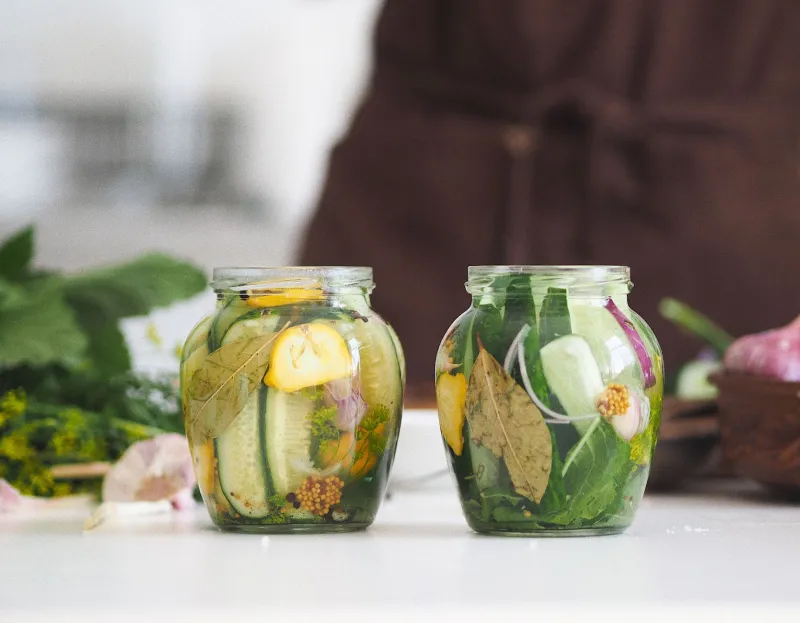
Somewhere in a Brooklyn apartment, a mason jar of shredded cabbage and salt is slowly transforming into sauerkraut. In a farmhouse kitchen outside Asheville, North Carolina, a batch of apple cider vinegar is finishing its second ferment. And in a garage in Portland, Oregon, a retired schoolteacher named Gwen is on her fourteenth consecutive year of making miso from locally grown soybeans. None of these people are professional chefs. None of them are running food businesses. They're just people who got hooked on the alchemy of fermentation — and they're part of a movement that's growing faster than a sourdough starter on a warm counter.
Fermentation is having a serious moment. But if you ask the people doing it, they'll tell you it never really went away. It just got buried under decades of refrigeration, shelf-stable convenience food, and the cultural amnesia that comes with industrial food systems.
From Pantry Staple to Political Act
For most of human history, fermentation wasn't a hobby. It was survival. Before refrigerators, before canning factories, before the global supply chain delivered strawberries in January, people fermented because they had to. Cabbage became sauerkraut. Milk became cheese and yogurt. Grain became beer and bread. Cucumbers became pickles. The harvest was long, but winter was longer, and fermentation was the bridge.
"What we're seeing now isn't really a renaissance," says Dr. Priya Anand, a food historian at the University of Vermont who studies preservation traditions across immigrant communities. "It's more of a reclamation. People are reaching back for something that got taken from them, and a lot of them are doing it consciously — as a response to exactly the kind of food system that made fermentation seem unnecessary in the first place."
That food system — the one that prioritizes uniformity, shelf life, and scale over nutrition, flavor, and community — is exactly what a growing number of conscious eaters are pushing back against. And fermentation, it turns out, is one of the most accessible tools they have.
Extending the Season, Shrinking the Waste
One of the most compelling arguments for home fermentation is purely practical: it stretches the local growing season in a way that even freezing can't fully replicate. When your CSA box arrives in late August with more tomatoes and hot peppers than any household can eat in a week, fermentation offers a path forward that isn't just about preservation — it's about transformation.
Take Marcus Webb, a home fermenter in Columbus, Ohio, who started experimenting with fermented hot sauces four years ago after watching his neighbor compost an entire flat of end-of-season jalapeños. "I thought, there has to be a better way," he says. "Now I make six or seven different fermented hot sauces every fall, all from peppers I get from two farms at the Franklin Park Conservatory market. Nothing goes to waste. Everything gets better."
That last part — everything gets better — is something fermenters say over and over again. The flavor complexity that develops during lacto-fermentation, the gentle funk of a well-aged kimchi, the bright sourness of properly fermented dilly beans: none of it exists in the fresh vegetable. Fermentation doesn't just preserve the harvest. It deepens it.
Food waste reduction is a significant part of the equation, too. The USDA estimates that between 30 and 40 percent of the US food supply is wasted. Home fermentation can't solve that on its own, but it's a meaningful intervention at the household level — one that turns surplus into something genuinely valuable.
Small-Batch Producers Are Bridging the Gap
Not everyone has the time, space, or inclination to maintain a fermentation practice at home. That's where a new wave of small-batch producers is stepping in — and many of them are doing it with a deep commitment to local sourcing.
Take Claybird Ferments, a one-woman operation run by Sasha Moreau out of a licensed kitchen in Brattleboro, Vermont. Sasha sources all of her vegetables from farms within 50 miles, and her product lineup changes seasonally — fermented ramp paste in spring, curtido made from local cabbage in summer, spiced fermented squash in fall. "I don't have a year-round catalog," she says with a laugh. "I have what's ready. That's the whole point."
Businesses like Claybird are doing something that goes beyond making a tasty condiment. They're creating economic relationships that support small farms, building community around shared food culture, and offering an alternative to the mass-produced "probiotic" products that have flooded mainstream grocery stores in recent years — products that often have little connection to local agriculture and even less meaningful microbial activity.
"The word 'probiotic' has been completely hijacked by marketing," says Dr. Anand. "A shelf-stable product that's been pasteurized after fermentation isn't doing what a live, raw ferment does. People are starting to understand the difference, and that's driving them toward local producers and home practice."
Flavor as Cultural Memory
There's another dimension to the fermentation revival that doesn't get talked about enough: cultural continuity. For many communities — Korean Americans making kimchi, Eastern European families passing down sauerkraut recipes, South Asian households fermenting idli batter — fermentation is bound up with identity and memory in ways that go far deeper than nutrition or waste reduction.
"My grandmother never called it fermentation," says Yuki Tanaka, a Japanese American home cook in Seattle who makes her own miso, tsukemono, and amazake. "She just called it cooking. It was what you did with the food you had. Reconnecting with these practices has been a way of reconnecting with her, with my family's history, with a way of eating that was whole and intentional."
This intersection of food, culture, and community is exactly why fermentation fits so naturally within the broader local food movement. It's not just about what's in the jar. It's about who taught you, where the ingredients came from, and what you do with the finished product — whether that's sharing it with neighbors, selling it at a farmers market, or simply putting it on the table.
Getting Started Without Getting Overwhelmed
If you're curious about fermentation but intimidated by the learning curve, here's the honest truth: it's more forgiving than it looks. Salt and vegetables and time will get you surprisingly far. Sauerkraut requires nothing more than cabbage, salt, and patience. Fermented hot sauce needs peppers, salt, and a jar with a loose lid. Kombucha requires a SCOBY (which you can almost certainly get for free from someone in your local fermentation community) and some sweet tea.
Fermentation communities are also genuinely welcoming. Groups like Cultures for Health, local fermentation workshops at community centers and co-ops, and active subreddits like r/fermentation offer a wealth of knowledge for beginners. Many cities have fermentation clubs where members swap starters, troubleshoot batches, and share the harvest.
The best place to start? Your nearest farmers market, at the end of the season, when vendors are practically giving away imperfect produce. Buy more than you think you need. Go home. Add salt. Wait.
What comes out the other side might just change the way you think about eating local.