Rooted in Place: The Chefs Bringing Indigenous Ingredients Back to American Tables
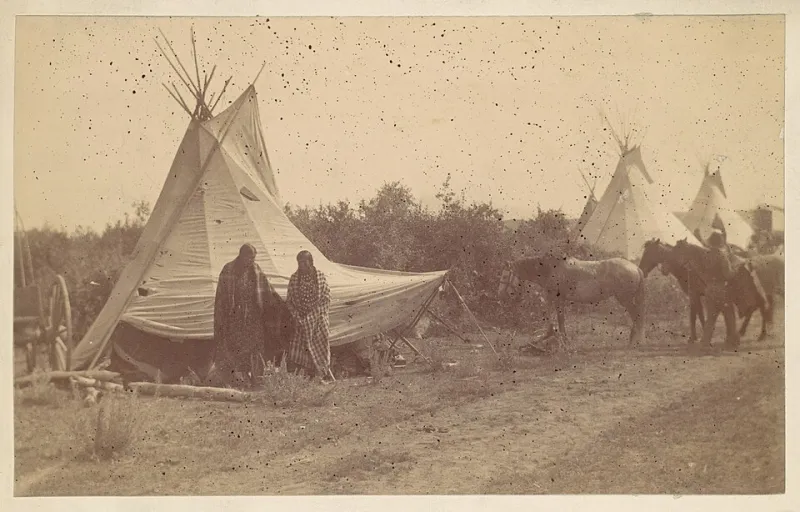
Photo: Unknown authorUnknown author, CC0, via Wikimedia Commons
Ask most diners to describe American regional cuisine and they'll probably land on a familiar shortlist: lobster rolls in Maine, barbecue in the Carolinas, green chile in New Mexico. These are real and meaningful food traditions, but they're also relatively recent ones — built on centuries of European settlement, agricultural importation, and the systematic displacement of the people who had been feeding themselves from this land for thousands of years before any of that happened.
A growing number of chefs, food producers, and Indigenous food stewards are asking a harder question: what does this land actually want to grow? And what might American cooking look like if it took that question seriously?
The Ingredient Beneath the Ingredient
In eastern Kentucky, chef Lena Combs has built her restaurant's identity around what she calls "the food that was already here." Her menu changes with the season and the forest, featuring ramps foraged from hollow woodlands, pawpaw puddings made from fruit that ripens in September along creek banks, and stews built on dried beans from varieties that Appalachian communities — including Indigenous communities long before European contact — have cultivated for centuries.
"Appalachian food has always been misunderstood from the outside," she says. "People see poverty food, or they see hillbilly stereotypes. But when you dig into the actual history of this foodshed, you find something extraordinarily sophisticated. Cherokee agricultural knowledge shaped this landscape. We're just starting to reckon with that."
The pawpaw alone is a striking example of how thoroughly pre-colonial food knowledge was suppressed and forgotten. North America's largest native fruit — creamy, tropical-tasting, and almost absurdly delicious — was a staple food for Indigenous communities across the eastern half of the continent. It nearly vanished from the American diet entirely over the twentieth century, surviving mainly in the wild and in the memories of people whose families never stopped eating it. Now it's appearing on menus in Lexington, Pittsburgh, and Washington, D.C., often with explicit acknowledgment of its cultural origins.
Tepary Beans and Desert Wisdom
In the Southwest, the reclamation of Indigenous food traditions is happening with particular urgency — and with direct partnerships between chefs and Native communities.
The tepary bean, a drought-adapted legume cultivated by the Tohono O'odham people of the Sonoran Desert for more than five thousand years, is now appearing on menus across Arizona and New Mexico. Unlike commodity beans bred for industrial agriculture, tepary beans were developed over millennia to thrive in extreme heat with minimal water — a characteristic that feels less like a historical curiosity and more like an urgent practical asset as the Southwest faces intensifying drought.
Chef Diego Reyes, who runs a restaurant in Tucson, sources his tepary beans directly from Ramona Farms, a Tohono O'odham family operation that has been growing heritage crops on the Gila River Indian Community for decades. For Reyes, the relationship is the point.
"You can't just take an ingredient and put it on a menu and call it Indigenous-inspired," he says. "That's extraction. What we're trying to do is build a real relationship — with the farmers, with the knowledge, with the history. The bean is only meaningful in that context."
Ramona Farms grows not just tepary beans but also heritage corn, cholla buds, and other traditional O'odham crops that have never entered the commercial food system. Their work is simultaneously agricultural, cultural, and political — preserving a food tradition that was actively suppressed through federal assimilation policies that banned traditional farming practices and forced Native communities onto commodity food programs.
The Language of Terroir
Farm-to-table cuisine has spent years developing a vocabulary for place — terroir, foodshed, provenance. But critics have pointed out that this vocabulary often stops short of a genuine reckoning with the deepest layer of a region's food history.
"When we talk about local ingredients, we usually mean local in terms of miles," says food writer and Indigenous food advocate Sasha Morningstar, who is Ojibwe and based in Minneapolis. "We rarely mean local in terms of time. But the most local food knowledge in any American region is Indigenous food knowledge. It goes back thousands of years. That's the real terroir."
In the Great Lakes region, that terroir includes wild rice — manoomin in Ojibwe — a grain that has sustained Anishinaabe communities for centuries and that is now appearing on menus in Minneapolis and Chicago restaurants that are being intentional about how they source and credit it. It includes lake fish prepared according to traditional methods. It includes a pharmacopoeia of wild plants — nettles, cattail pollen, wood sorrel — that have fed people through harsh northern winters long before grocery stores existed.
Some chefs are going further, working directly with tribal nations on food sovereignty initiatives that extend well beyond the menu. In the Pacific Northwest, partnerships between restaurants and Coast Salish communities have helped fund the restoration of traditional camas meadows — the starchy, nutritious bulb that was a staple food across much of the region before European settlement converted those meadows to farmland.
Caution, Credit, and Collaboration
Not everyone is celebrating the sudden culinary interest in Indigenous ingredients. Native food activists have raised legitimate concerns about appropriation — about non-Native chefs profiting from food knowledge without meaningful community benefit, or about ingredients being extracted from ecosystems that Indigenous communities depend on.
"There's a difference between appreciation and extraction," says Morningstar. "And a lot of what passes for appreciation in the food world is actually just extraction with a nice story attached."
The chefs doing this work most thoughtfully are the ones who are most explicit about these tensions. They credit their sources. They pay above market rates. They share platforms and revenue. They ask permission before foraging on traditional lands. And increasingly, they step back and amplify Indigenous chefs, farmers, and food entrepreneurs who are leading this reclamation on their own terms.
Chef Sean Sherman — Oglala Lakota, James Beard Award winner, and founder of The Sioux Chef in Minneapolis — has become one of the most important voices in this conversation. His work isn't about influencing mainstream restaurant culture from the outside. It's about building an entirely parallel food system rooted in Indigenous knowledge, Indigenous land stewardship, and Indigenous economic sovereignty.
"This isn't about nostalgia," Sherman has said. "It's about the most sustainable, most place-specific, most nutritionally intelligent food system that has ever existed on this continent. We're not looking backward. We're looking at what actually works."
What Local Really Means
The farm-to-table movement has always been about shortening the distance between eaters and the source of their food. But distance isn't only measured in miles. It's measured in history, in relationship, in accountability.
The chefs and food stewards working with Indigenous ingredients are expanding what local means — pulling it out of the farmers market and into a deeper, more complicated, more honest conversation about this land, who has always known it best, and what it might feed us if we learned to listen.
That conversation is long overdue. And it's delicious.