Growing Their Own: How Small-Town America Is Quietly Rebuilding the Local Food System
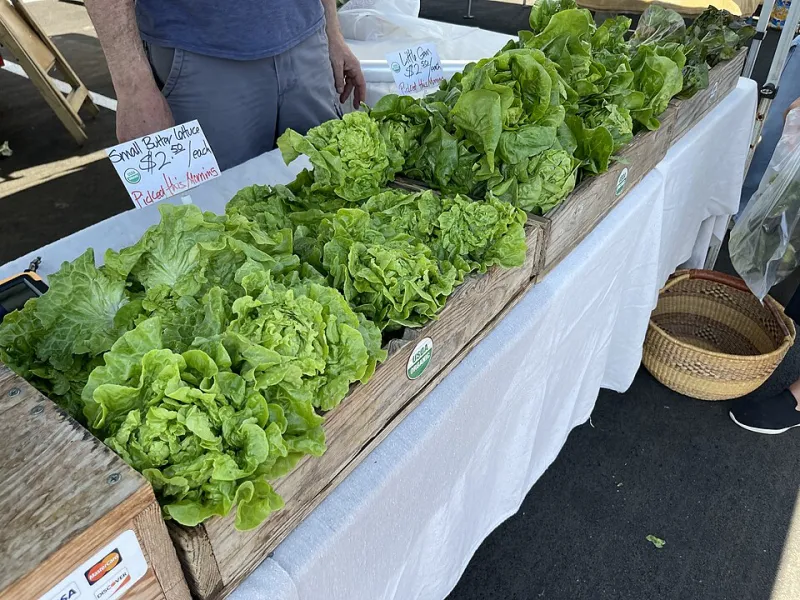
Photo: Missvain, CC BY 4.0, via Wikimedia Commons
Drive through enough of rural America and a certain landscape becomes depressingly familiar: a Dollar General, a gas station selling hot dogs under a heat lamp, maybe a fast food chain if the town is big enough to warrant the franchise fee. Fresh produce? Local meat? A farmers market? Not always. Sometimes not even close.
Food deserts — areas with limited access to affordable, nutritious food — don't only exist in urban centers. In fact, rural food insecurity is often more severe and harder to address than its city counterpart, precisely because the distances are greater, the infrastructure is thinner, and the communities are smaller. The conventional food system, built around efficiency and scale, has little financial incentive to serve a town of 800 people in eastern Kentucky or a sprawling agricultural county in the Texas panhandle where the nearest full-service grocery store is forty-five minutes away.
But here's the thing about small towns: they have a long history of figuring things out for themselves. And across the country right now, a wave of farmers, organizers, entrepreneurs, and plain old neighbors are doing exactly that — building local food systems from scratch, in places where the market long ago decided not to bother.
The Grain Co-Op Renaissance
One of the most quietly radical food movements happening in America right now involves wheat. Specifically, it involves small communities reclaiming grain production and processing at a local scale — something that was once completely normal before industrial agriculture consolidated the entire supply chain into the hands of a few enormous corporations.
In the Northern Plains, community grain co-ops are making a modest but meaningful comeback. In towns across Montana, North Dakota, and Minnesota, small groups of farmers and consumers are pooling resources to grow, mill, and distribute heritage grain varieties that disappeared from regional foodways decades ago. The flour that results is fresher, more flavorful, and more nutritious than the commodity flour sitting on supermarket shelves — and the money stays in the community.
The Farmer Ground Flour cooperative in upstate New York has become something of a model for this approach, connecting small-scale grain farmers with a stone mill and a direct-to-consumer distribution network. Their success has inspired similar efforts in the Midwest and mid-Atlantic, where farmers are experimenting with emmer, einkorn, and regionally adapted wheat varieties that simply don't exist in the industrial supply chain.
"People don't realize how much flavor they're missing until they taste bread made with fresh-milled local flour," says one co-op member in central Iowa who asked to remain anonymous because, as she put it, "I don't want to sound like I'm bragging." She's not bragging. The bread is genuinely extraordinary.
Mobile Markets: Bringing the Farmers Market to the People
One of the persistent challenges with traditional farmers markets is that they tend to serve the people who are already most food-secure: shoppers with flexible schedules, reliable transportation, and disposable income. The format — fixed location, weekend mornings, cash-friendly but not always SNAP-friendly — can inadvertently exclude the very communities that most need access to fresh local food.
Mobile farmers markets are trying to flip that equation. Rather than asking underserved communities to come to the food, these programs bring the food to the communities.
In western North Carolina, the Appalachian Sustainable Agriculture Project runs a mobile market program that visits rural communities throughout the region, bringing locally grown produce directly to neighborhoods and small towns that don't have regular access to fresh vegetables. The market accepts SNAP and WIC benefits, which is both a practical necessity and a political statement: local food should not be a luxury item.
Similar programs have taken root in the Mississippi Delta, in tribal communities across the Southwest, and in the sprawling rural suburbs of Central Valley California, where agricultural workers who grow food for the rest of the country often struggle to afford fresh produce themselves. The irony of that last situation is not lost on anyone involved.
"We're literally surrounded by fields," says Maria Elena Gutierrez, a community organizer in Fresno County who helped launch a mobile market serving farmworker communities. "But the food grown here gets shipped to distribution centers and comes back as something nobody can afford. We're trying to short-circuit that whole loop."
Food Hubs: The Infrastructure Nobody Talks About
If mobile markets are the front end of the local food system — the part that consumers see — food hubs are the unglamorous, essential infrastructure holding everything together in the back.
A food hub is essentially a regional aggregation and distribution center for local food: a place where small farms can bring their products, where those products get sorted, stored, and redistributed to restaurants, schools, hospitals, and retail outlets, and where the logistics of getting local food to local people actually get solved. Without food hubs, small farms often can't access institutional markets, and institutions can't reliably source local food because no single farm can supply everything they need.
The Local Food Hub in Charlottesville, Virginia has spent more than a decade building exactly this kind of infrastructure for the Shenandoah Valley region, connecting dozens of small farms with schools, universities, and food banks. The model has been replicated across the country, from the Red Tomato network in New England to the Appalachian Food Hub in southwest Virginia.
In rural areas specifically, food hubs often serve a dual function: they're economic development tools as much as food access solutions. When a food hub helps a small farm sell to a regional school district, that's money staying in the local economy, jobs being supported, and farmland being kept in production rather than sold off to a developer.
CSAs Beyond the Usual Suspects
Community Supported Agriculture — the model where consumers buy a seasonal "share" of a farm's harvest upfront, sharing both the bounty and the risk — has been around since the 1980s, but it has historically skewed toward affluent, educated consumers in college towns and urban areas. That's changing.
In Appalachian Ohio, a network of small farms has launched a sliding-scale CSA program specifically designed to serve lower-income families, with shares priced according to household income and pickup points located in community centers and churches rather than farm stands. Participation has grown steadily every year since the program launched.
In the Rio Grande Valley of South Texas — a region with some of the highest rates of food insecurity in the country — the Proyecto Diluvio urban farm collective has built a CSA model rooted in traditional Mexican and Indigenous foodways, growing chiles, tomatillos, herbs, and vegetables that reflect the actual culinary traditions of the community rather than defaulting to the generic "mixed vegetable box" model.
"We're not just trying to give people vegetables," says co-founder Alejandro Reyes. "We're trying to give people their vegetables. The food their grandmothers cooked. That matters."
What You Can Do
If you're reading this from a community that already has good local food access, the most useful thing you can do is probably financial: donate to food hub organizations, buy from farms that participate in SNAP-matching programs, and advocate for federal Farm Bill funding that supports regional food infrastructure rather than just commodity crops.
If you're in a community that lacks local food access — or if you're somewhere in between — the options are more hands-on. Reach out to your local extension office (every county in the US has one) about resources for starting a CSA or food co-op. Connect with your regional food policy council if one exists. Talk to your neighbors about what a mobile market pickup site might look like at your church, library, or community center.
The local food system doesn't build itself. But as these communities are proving, it absolutely can be built — one co-op, one mobile market, one food hub at a time.