When January Comes: The Brutal Honesty of Eating Local All Winter Long
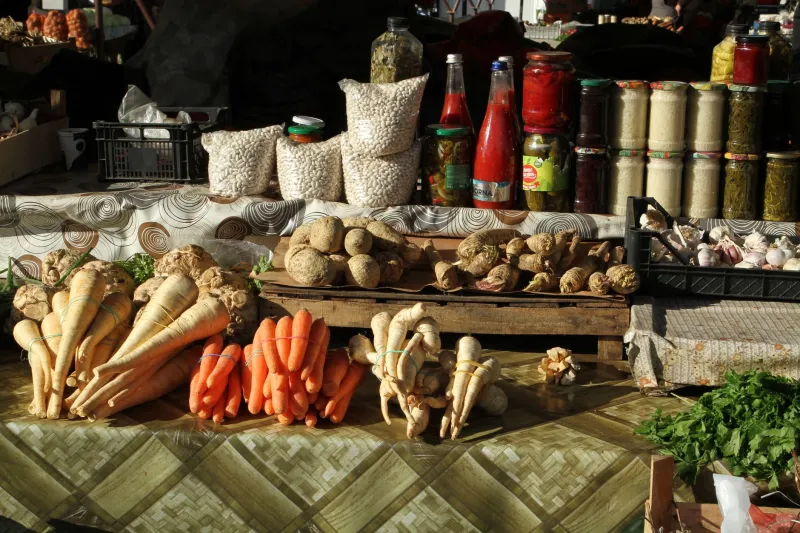
Let's start with an uncomfortable confession: most of us who call ourselves local eaters are lying a little. Not maliciously. Not even consciously. But when the farmers market closes in November and the grocery store shelves are stacked with California strawberries and Chilean grapes, the vast majority of even the most committed locavores quietly reach for the out-of-season produce and tell themselves it doesn't count.
It counts.
For eaters living in Minnesota, Wisconsin, upstate New York, or any of the dozens of other American regions where winter is a genuine force of nature rather than a mild inconvenience, the philosophy of local omnivory eventually runs into a wall. That wall is made of frozen ground, bare fields, and the stubborn biological fact that humans need more than root vegetables and preserved meat to thrive. What you do when you hit that wall — how you negotiate it, rationalize it, or refuse to — reveals more about your food values than any summer farmers market haul ever could.
The Purity Trap
Sarah Voigt has been farming outside of Duluth, Minnesota for eleven years. She raises heritage pigs, grows market vegetables, and keeps a small flock of laying hens. She is also one of the most pragmatic voices in her regional food community, which is why she has little patience for what she calls "locavore absolutism."
"Every few years someone comes through here talking about eating one hundred percent local, one hundred percent of the time," she says. "And I respect the impulse. But by February they're either miserable, nutritionally compromised, or they've quietly started buying oranges and not telling anyone."
Voigt's point isn't that local eating is a fraud. It's that the purity trap — the all-or-nothing thinking that frames any compromise as failure — actually undermines the broader project. When people set impossible standards, they burn out. They abandon the whole framework instead of renegotiating it. And the farmers who depend on their commitment lose customers.
"I'd rather have a hundred customers who buy my pork and my eggs all winter and supplement with some fair-trade coffee and a few citrus fruits," she says, "than ten purists who last one season and give up."
What 'Local' Actually Means in January
Part of the problem is definitional. 'Local' is a word that does a lot of heavy lifting in food culture, and it means wildly different things depending on who's using it. A 100-mile radius in Vermont looks nothing like a 100-mile radius in Phoenix. A committed locavore in coastal California has access to fresh produce year-round that a committed locavore in Fargo simply cannot replicate without a greenhouse and a serious investment in infrastructure.
Nutritionist and food writer Dani Kowalczyk, who splits her time between Chicago and a small farm in southern Wisconsin, has spent years thinking through these regional disparities. Her conclusion is that the conversation needs to shift from geography to relationship.
"The question I ask my clients isn't 'where did this food come from?' — it's 'do you know the person who grew it?'" she says. "Because a carrot that was grown fifty miles away by a farmer you've met and whose practices you trust is categorically different from a carrot that was grown two hundred miles away by an industrial operation, even if both technically qualify as 'local' under some definitions."
This relational model of local eating doesn't dissolve the winter problem, but it reframes it. Under Kowalczyk's framework, buying a bag of dried beans from a regional grain cooperative in January is a deeply local act. Buying frozen corn from a farm you visited in August is a local act. Stocking your pantry in October with lard rendered from a pig you watched being raised is a local act. The season extends, in a sense, through preservation, relationship, and intention.
The Seasonal Sacrifice Is Real — And It's Worth Making
None of this is meant to let anyone entirely off the hook. The seasonal sacrifice that genuine local eating demands in cold climates is real, and glossing over it with clever reframing does a disservice to the people actually doing the hard work.
Josh Reinhart runs a small diversified farm outside of Madison, Wisconsin, and he is bracingly direct about what he thinks local food advocates tend to avoid saying out loud.
"If you're serious about this, winter is boring," he says. "You're eating a lot of squash. A lot of fermented things. A lot of dried legumes and stored grains. You're eating meat that you bought in bulk in the fall and kept in a chest freezer. It's not glamorous. It's not Instagram-friendly. But it's honest."
Reinhart's own family has eaten this way for going on six years. They supplement strategically — citrus for vitamin C, olive oil from a domestic producer in California, the occasional tropical fruit for his kids — but the foundation of their winter diet is genuinely regional. He doesn't frame this as deprivation.
"Our grandparents ate this way because they had no other option," he says. "We're choosing it. That's actually a privilege. And I think sitting with the discomfort of a limited winter pantry teaches you something about gratitude and seasonality that no amount of summer abundance can."
Building a Winter Food Philosophy
So what does a workable, honest, non-perfectionist approach to local eating in cold climates actually look like? A few principles seem to emerge from the people doing it well.
Invest in preservation infrastructure. A chest freezer, a canning setup, a root cellar or even just a cool dark corner of your basement — these are the tools that extend the local season. The person who puts up forty pounds of tomatoes in August and renders lard in October is eating locally in January even if they never set foot in a winter farmers market.
Make strategic exceptions, not habitual ones. There's a meaningful difference between buying a bag of oranges because you're craving fresh fruit in February and thoughtlessly tossing Chilean asparagus into your cart because it's there. The first is a considered trade-off. The second is just habit dressed up as nothing.
Lean into regional staples. Every cold-climate region has traditional winter foods — wild rice in the Great Lakes, dried beans in the Upper Midwest, smoked and cured meats throughout Appalachia. These are foods that were developed precisely because they work in the context of regional seasonality. Learning to cook them well is not a consolation prize. It's a culinary education.
Stop performing local eating and start practicing it. The farmers market selfie in August is easy. The unglamorous act of cooking another pot of bean soup in January, sourced from a regional grain farmer whose newsletter you actually read, is the real thing.
The Honest Reckoning
Eating local in a cold climate is, in the end, a practice of negotiation. It requires you to define your values clearly enough to know when you're honoring them and when you're fudging them — and to be honest with yourself about the difference. It asks you to sit with the discomfort of limitation rather than shopping your way out of it.
Nobody gets it perfect. Not the farmers, not the nutritionists, not the food writers, and certainly not the people writing articles about it. But the reckoning itself — the willingness to ask hard questions about what local and responsible actually mean when the temperature drops and the fields go bare — is exactly the kind of thinking the food system needs more of.
January is coming. Start thinking now about what you're going to eat when it gets here.