Know Your Butcher, Know Your Food: The Case for Whole-Animal Thinking at Your Neighborhood Shop
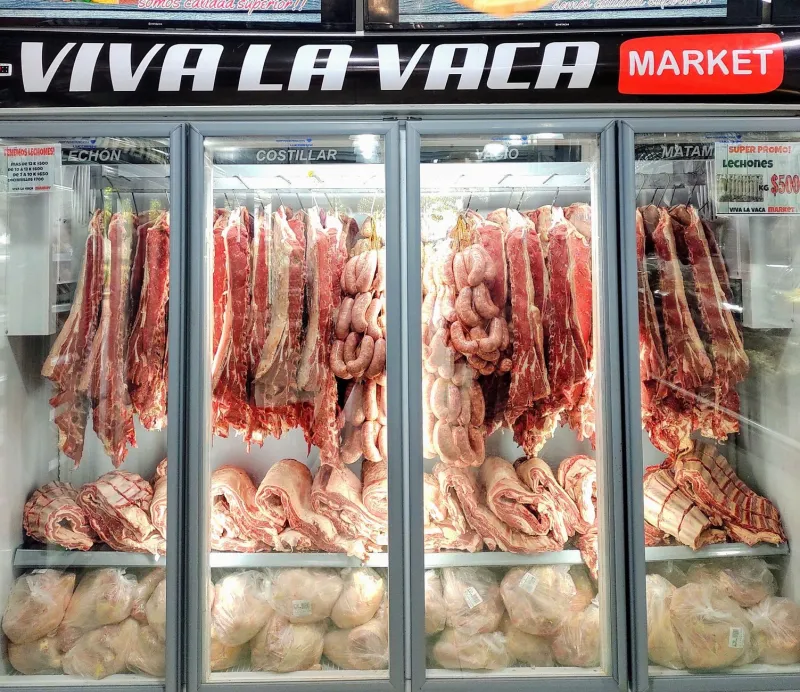
There's a moment that happens in every good independent butcher shop, usually somewhere between the display case and the register. A customer points at something unfamiliar — a tray of chicken livers, a stack of beef cheeks, a bundle of marrow bones — and asks, hesitantly, what do I even do with that? And the butcher, if they're the right kind of butcher, lights up.
That moment of curiosity is exactly what independent butchers across the country are banking on. Not in a cynical way — but because the economics of ethical, whole-animal sourcing genuinely depend on it.
The Math Behind the Whole Animal
Here's something most grocery store shoppers have never had to think about: when a butcher buys a whole animal from a local farm, they're responsible for selling all of it. Not just the ribeyes and the pork chops. The liver. The heart. The tongue. The trotters. The leaf lard. Every single part.
For large-scale commodity operations, the less-glamorous parts get ground into processed products, rendered into feed, or simply discarded. But for a small independent shop sourcing whole animals from regional farms — the kind of operation that pays a fair price to a farmer raising animals humanely on pasture — that's not an option. The math only works if customers buy the whole picture.
"We pay a premium for our animals because we believe in how they're raised," says Marcus Webb, who runs a whole-animal butcher shop in Asheville, North Carolina. "But that premium only makes sense for us if we're moving the whole carcass. When someone walks out with a pound of chicken hearts or a beef tongue, they're not just getting a great deal — they're literally making it possible for us to keep sourcing the way we do."
That's not a guilt trip. It's just the reality of what ethical sourcing costs and how independent shops stay solvent.
What Most Home Cooks Are Missing
American food culture spent most of the 20th century systematically erasing offal from the mainstream table. Organ meats went from working-class staple to punchline, and a generation of home cooks grew up with no frame of reference for cooking a kidney or braising a heart. The result is that an enormous amount of nutritious, flavorful, affordable food gets treated like a liability instead of an asset.
Butchers who specialize in whole-animal work are pushing back on that narrative — one conversation at a time.
In Portland, Oregon, Simone Achterberg has built her shop around what she calls "the education model." Every cut in her case has a small card explaining where it comes from on the animal, how to cook it, and why it matters. She hosts monthly "odd cuts" dinners where customers cook together in the shop's back kitchen. "People are not squeamish because they're weak," she says. "They're squeamish because nobody ever showed them anything different. Once you make chicken liver pâté with someone who loves it, the fear just evaporates."
That kind of hands-on community education is becoming a signature feature of the new wave of independent butchers — and it's doing something that no amount of food media coverage quite manages: it's changing actual behavior at the stove.
The Regional Dimension
What whole-animal butchery looks like varies considerably depending on where you are in the country, and that regional variation is part of what makes it interesting.
In the South, traditions around hog butchery run deep. Shops in places like Charleston and New Orleans are drawing on long-standing culinary cultures that never abandoned the head cheese, the chitterlings, or the boudin. For butchers in those regions, the work is often less about introducing customers to new ideas and more about reconnecting them with something that was always there.
In the Midwest, beef is king, and butchers like Dan Kowalczyk in Kansas City are finding that customers who've never thought twice about a T-bone are genuinely curious about beef liver once they understand the animal it comes from. "I sell a lot of liver to people who grew up hating it," he says, laughing. "But that's because they had commodity liver from a feedlot animal. Grass-fed beef liver from a farm forty miles away? It's a completely different product."
And in urban markets on both coasts, a younger demographic of food-curious home cooks is showing up with questions that would have seemed unusual a decade ago. They want to know about sourcing. They want to know about the farm. They want to know how to make bone broth from scratch, and whether they can buy a whole lamb for a dinner party.
Building the Relationship
The transaction that happens at an independent butcher counter is categorically different from what happens in a grocery store meat department. It's slower. It's more conversational. And if you let it, it's genuinely educational in a way that reshapes how you think about food.
The butchers doing this work well will tell you things your grocery store never will: which cuts are underpriced because demand is low, how to ask for something to be broken down differently, what's particularly good right now because of the season or the specific animal they just got in. That kind of knowledge transfer is part of what you're paying for when you shop local — and it compounds over time.
"My regulars cook completely differently than they did when they first came in," says Achterberg. "They're not afraid of a whole chicken anymore. They're making stock from the carcass. They're asking about duck confit and lamb neck. It just takes time and trust."
Trust, it turns out, is the core product that independent butchers are selling. Trust in the sourcing. Trust in the information. Trust that the person behind the counter actually gives a damn about the animal, the farmer, and the food on your table.
Where to Start
If you've never really talked to your butcher — or if you're still buying all your meat from a big-box grocery store — the entry point is simpler than you might think. Start with bone broth. Ask for a bag of soup bones, roast them, and make a batch. It's inexpensive, nearly impossible to mess up, and it gives you an immediate, tangible sense of what you've been leaving on the table.
From there, try beef liver once — properly cooked, with good butter and caramelized onions — before you decide you don't like it. Ask your butcher what they'd recommend for a weeknight braise. Tell them what you're nervous about and let them talk you through it.
The whole-animal philosophy isn't about forcing yourself to eat things you hate. It's about expanding the circle of what you're willing to try, building a relationship with someone who knows where your food comes from, and understanding that responsible eating isn't just about what you don't buy — it's about what you choose to value.
Your neighborhood butcher, if you're lucky enough to have one, is waiting to have that conversation. Walk in and start it.