The Case for the Pickle Jar: Why Preserved Foods Deserve a Permanent Spot at Your Farmers Market
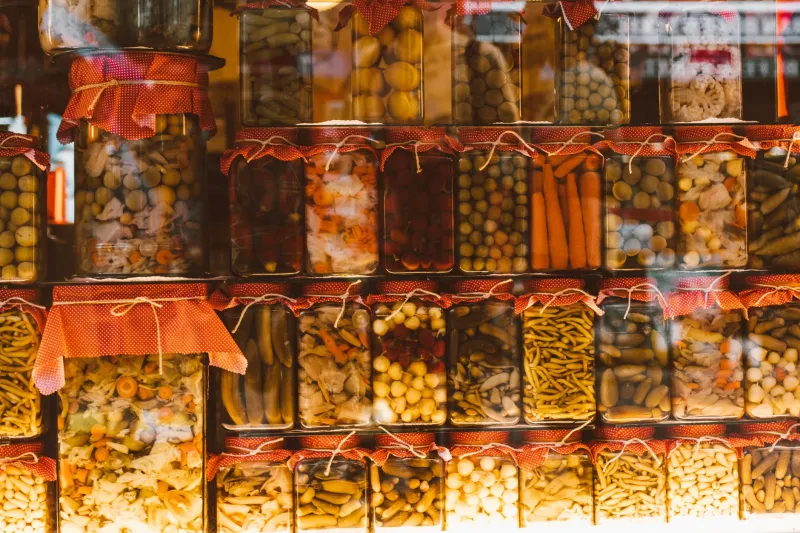
Walk any farmers market on a Saturday morning in August and the hierarchy is obvious. The heirloom tomatoes go first. Then the corn, the peaches, the fresh-cut flowers. By 10 a.m., the good stuff is gone and the vendors are already doing math in their heads. Meanwhile, a few tables down, a jar of fermented dilly beans or a pot of blueberry preserves sits largely unbothered, waiting for someone to notice it.
That jar represents something worth paying attention to — not just as a condiment, but as a statement about how we value local food.
The Fresh Bias Is Real, and It Has Consequences
Farmers markets in the United States have built their identity around freshness. That's not a bad thing — there's real meaning in buying a tomato that was picked yesterday from a farm twenty miles away. But our collective fixation on the fresh and the seasonal has created a blind spot around preservation, and that blind spot is quietly hurting small producers.
Consider the economics. A farmer who grows strawberries faces a brutal window. The berries are ripe, they're perishable, and if they don't sell at market, they're compost. The same farmer who jars those strawberries into preserves, who ferments them into shrub, who dehydrates them into a shelf-stable product — that farmer has transformed a liability into an asset. Preserved goods don't spoil between Saturday and Sunday. They don't require refrigerated transport. They can be sold in January when the market stalls are half-empty and customers are desperate for anything that tastes like summer.
And yet, those jars consistently underperform at market. Customers balk at the price. They pick up the jam, turn it over, set it back down. They buy the fresh berries instead.
What Preservation Actually Costs
Here's where the misunderstanding runs deep. When you buy a $12 jar of locally made sauerkraut, you're not paying for cabbage. You're paying for the time it took to shred, salt, and ferment that cabbage. You're paying for the mason jar and the lid, for the commercial kitchen rental many small producers are legally required to use, for the cottage food licensing fees that vary wildly by state and can run into hundreds of dollars annually. You're paying for the labor of someone who actually understands the science of lacto-fermentation and is doing it carefully enough that you won't get sick.
Margarita Vásquez, who runs a small preservation operation out of a shared kitchen space in Albuquerque, New Mexico, puts it plainly: "People will spend fifteen dollars on a cocktail without thinking about it. But they'll stand there and tell me my green chile hot sauce is too expensive. That hot sauce took me three days to make."
Vásquez sells at two local markets and does most of her business through a small CSA-style subscription model she built specifically because market sales alone weren't sustainable. "At the market, I'm competing with fresh produce for attention and for wallet share. The subscription lets people commit upfront, which means I can actually plan."
That kind of workaround is common among preservation-focused producers. They adapt because the market — in both senses of the word — hasn't fully caught up to what they're offering.
The Regulatory Maze Doesn't Help
Beyond consumer perception, there's a structural problem: cottage food laws in the US are a patchwork mess. Some states allow producers to sell a wide range of preserved goods directly to consumers with minimal licensing. Others require commercial kitchen certification for anything beyond baked goods. A few states have recently expanded their cottage food exemptions, but the rules around pH levels, water activity, and labeling requirements can be genuinely daunting for a small producer trying to legally sell a jar of pickled okra.
This regulatory complexity means that many of the people who are best at preservation — home canners with decades of experience, immigrant families with deep traditions of fermented foods, backyard gardeners who've been putting up vegetables for years — face real barriers to selling what they make. The people who do make it to market have often invested significant time and money just to be there legally.
Which is exactly why buying from them matters.
Buying a Jar Is a Political Act (Stay With Us)
This is the argument that tends to make people roll their eyes, but it holds up. When you buy a fresh pepper at the farmers market, you're supporting local agriculture. When you buy a jar of fermented pepper paste from a local producer, you're doing that and something more: you're sustaining a food tradition, supporting a more resilient local food economy, and voting with your dollars for a model of food production that doesn't collapse the moment the season ends.
Preservation is how communities have always survived scarcity. Kimchi, sauerkraut, miso, chutney, salt cod — these aren't novelties or artisan affectations. They're solutions. They're what people made when they had too much of something good and knew winter was coming. Buying local preserved foods is a way of honoring that logic and keeping it alive in a food system that has largely replaced it with refrigerated distribution and imported produce.
It also, practically speaking, extends your local eating season in a way that fresh produce simply cannot. A jar of tomato conserva made in September can sit on your shelf until March. That's local flavor in the dead of winter, which is no small thing if you've ever tried to eat locally in, say, Minnesota in February.
How to Actually Shift the Market
If you want to see more preserved goods at your local market, the most direct thing you can do is buy them — and talk about why. Ask the producer questions. Post the jar on your Instagram. Bring the fermented salsa to the party instead of the store-bought stuff and watch people ask where you got it.
Beyond individual purchasing, there's a role for market organizers too. Some markets have begun actively recruiting preservation-focused vendors to create year-round programming, or hosting workshops on fermentation and canning to build customer familiarity and reduce the intimidation factor around preserved foods. A customer who understands what lacto-fermentation is will be a lot more willing to pay twelve dollars for a quart of kimchi.
And if you're a home cook who's been quietly putting up your own preserves for years, look into your state's cottage food laws. You might be closer to selling legally than you think — and your market might need you more than you realize.
The Jar Is Waiting
The next time you're at your farmers market and you've already grabbed your greens and your eggs and your loaf of sourdough, do one more loop. Find the table with the jars. Pick one up, read the label, and ask the person behind the table how they made it. Then buy it.
It's a small act. But small acts, repeated by enough people, are exactly what shift markets — the Saturday morning kind and the economic kind alike.